
Planning conference shuttle transportation in Ottawa: a planner's checklist
The short version
- Size the fleet from your peak movement, not your headcount — the busiest fifteen minutes of the day is what sets the vehicle count.
- Ottawa's two main convention venues pull in opposite directions: Rogers Centre Ottawa (formerly the Shaw Centre) is downtown at 55 Colonel By Drive, while the Cohere Centre (formerly the EY Centre) is next to the airport on Uplands Drive.
- A shuttle plan needs a written manifest, a named day-of contact on both sides, and a staging point agreed with the venue before the first vehicle arrives.
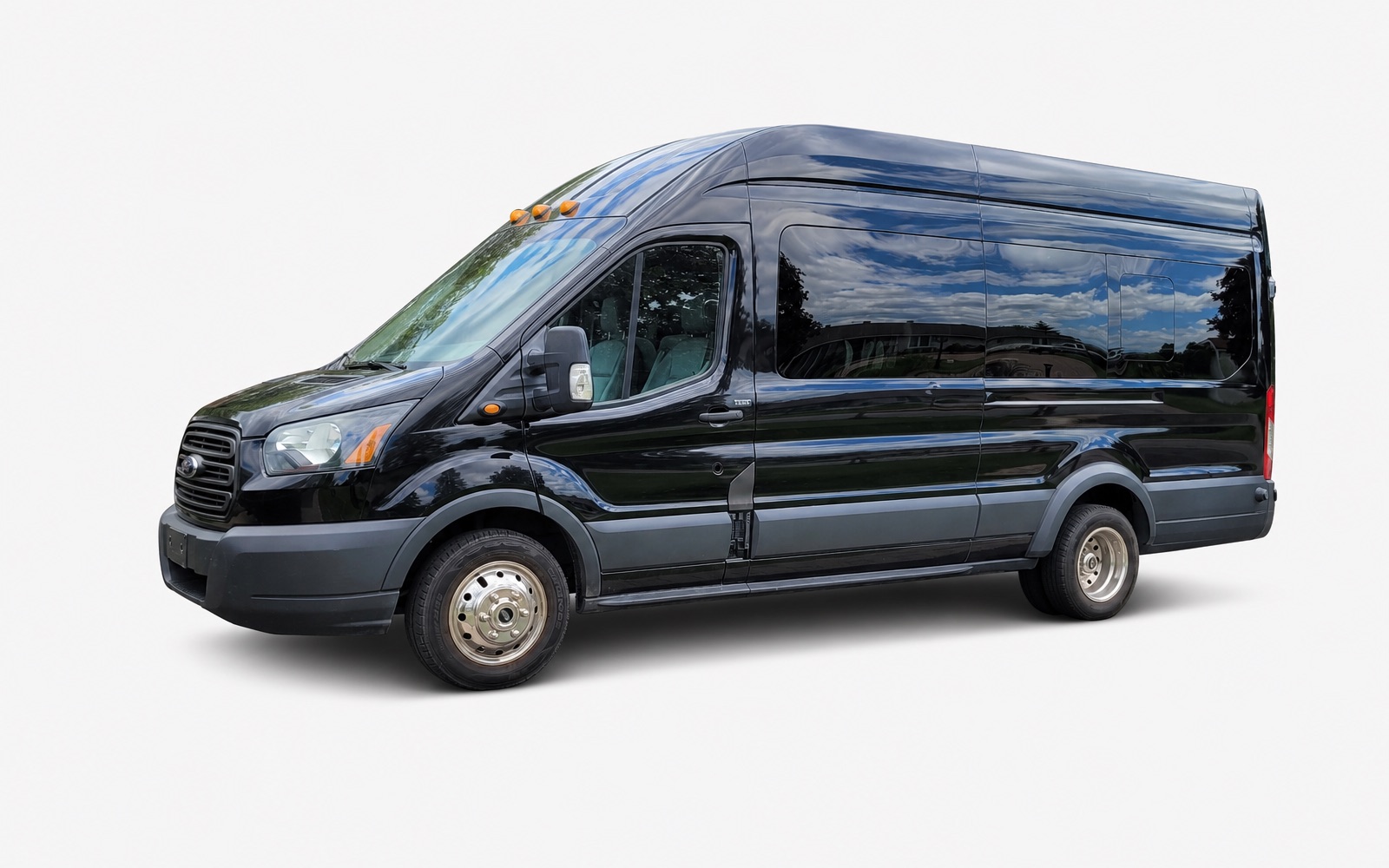
- Robinson's stretch SUV and executive van each seat up to 14, so delegate movements can be planned in blocks of roughly a dozen with luggage.
Conference transport is judged entirely by its failures. Nobody remembers the shuttle that showed up; everybody remembers standing outside a hotel in February wondering whether one was coming. The good news is that almost every failure traces back to a decision made weeks earlier — a headcount that was never converted into a vehicle count, or a pickup point nobody confirmed with the venue.
This is the sequence we would work through with a planner moving delegates around the National Capital Region.
1. Start from the peak movement, not the headcount
Two hundred delegates does not mean two hundred seats of transport. It means: how many people have to be somewhere else within the same fifteen minutes? That number — the peak movement — is what sizes the fleet. Everything else is scheduling.
Work it out for each of the day's pinch points. A gala with a single 6:30pm call time is a much harder transport problem than an eight-hour arrivals window with the same total headcount, and it is entirely possible for a 400-person conference to need fewer vehicles than a 60-person board offsite that all moves at once.
2. Convert the peak into vehicles
Once you have the peak number, the vehicle mix falls out of it. Robinson's fleet gives four sizes to build from:
| Vehicle | Seats | Typical role in a conference plan |
|---|---|---|
| Cadillac XTS corporate sedan | Up to 3 | Keynote speaker, sponsor, executive arriving separately |
| Lincoln Navigator executive SUV | Up to 6 | Small delegation, VIP group, luggage-heavy arrival |
| Lincoln Navigator stretch SUV | Up to 14 | Evening movements and group transfers that stay together |
| Sprinter-style executive van | Up to 14 | The workhorse: airport runs and hotel-to-venue loops with bags |
In practice a plan is usually a van or two running the loop, plus a sedan or SUV held for the people whose day cannot depend on a loop. Keep that separation explicit in the plan. A speaker sharing the general shuttle is fine right up until the shuttle is full.
3. Let the venue shape the plan
Ottawa's two main convention venues create almost opposite transport problems, and which one you are in should change your plan.
Rogers Centre Ottawa (formerly the Shaw Centre)
At 55 Colonel By Drive, overlooking the Rideau Canal, the downtown centre is within walking distance of a cluster of hotels — which sounds like it removes the transport problem and does not. What it removes is the daytime loop. What it leaves is arrivals from the airport, evening movements to offsite venues in weather that makes a ten-minute walk unappealing, and a kerbside situation shared with downtown traffic. Confirm your loading point with the venue and build in time for the last block downtown.
Cohere Centre (formerly the EY Centre)
On Uplands Drive next to the airport, with over 200,000 square feet of exhibition space, the south-end centre inverts it. Airport arrivals become trivially short. Everything else — hotels, dinners, the downtown evening programme — becomes a real transfer that has to be scheduled, and delegates will not be walking anywhere. This is where a properly sized shuttle loop earns its cost.
4. Write the manifest down
A manifest is not bureaucracy; it is the thing that lets somebody else solve a problem at 6am without calling you. For each movement, one line: time, pickup point, destination, number of passengers, vehicle assigned, and the name and mobile of the person who owns that movement on the ground.
- Arrivals — flight numbers, not just landing times, and the terminal door the group is told to use.
- Daily loops — first departure, last departure, and the interval in between.
- Evening movements — the return leg matters more than the outbound; it is the one people are waiting in the cold for.
- VIP and speaker movements — held separately, with their own vehicle.
- Departures — worked backwards from airline cutoffs, with the group's slowest member in mind.
5. Agree the boring details in advance
- Staging. Where does a vehicle wait between runs without being moved on? Agree it with the venue, not on the day.
- A named contact on each side. One person from your team, one from the operator, both reachable by phone. Not an inbox.
- A wet-weather and winter plan. Ottawa gets both. Loading positions that work in September do not always work in January.
- Signage and instructions to delegates. Half of all shuttle complaints are people who were at the wrong door.
- Accessibility requirements, asked for at registration rather than discovered at the kerb.
6. Brief the operator once, properly
The best thing you can send a transport operator is the whole picture in one message: dates, venue, hotel list, the manifest above, headcounts per movement, and what happens if a flight is late. A quote built from that is a quote you can hold someone to. A quote built from "we need a shuttle for a conference in May" is a guess, and it will be revised.
Robinson has been moving delegations across Ottawa and Gatineau since 2003, on one schedule rather than fifteen people in six taxis. If you are scoping an event, the corporate services page covers how we work with planners, and you can send the itinerary through or call and talk it through. If your delegates are flying in, getting from Ottawa Airport to downtown is worth forwarding to them in the joining instructions.
Frequently asked
- How many vehicles do I need for a conference shuttle in Ottawa?
- Size the fleet from your peak movement — the largest number of people who must travel within the same fifteen minutes — rather than from total headcount. Then allow for real cycle times: plan a shuttle loop at roughly two-thirds of its theoretical capacity.
- What is the Shaw Centre called now?
- Rogers Centre Ottawa. The downtown convention centre at 55 Colonel By Drive was renamed under a naming-rights agreement in October 2024, having been the Shaw Centre since 2014.
- What is the EY Centre called now?
- The Cohere Centre. It is the same venue at 4899 Uplands Drive next to the Ottawa airport, with over 200,000 square feet of exhibition space.
- How far in advance should conference transportation be booked in Ottawa?
- As early as the venue and hotel block are confirmed. Group vehicles are the scarcest part of any operator's fleet, and convention season overlaps with wedding and graduation season in the National Capital Region.
- Can one operator handle airport arrivals, daily shuttles and the gala?
- Yes, and it is usually better that way. One manifest, one point of contact and one set of vehicles means a late flight can be absorbed by moving something else, rather than becoming three separate suppliers' problems.
Tell us the date and the itinerary, and you'll get a quote for the day you actually have.
Keep reading
All guidesOttawa Airport to downtown: every way to get there, and when each one makes sense
Train, taxi, rideshare or a pre-booked car from Ottawa Airport to downtown — where each one picks up, how long it really takes, and which to choose for a business arrival.
What actually determines the cost of a limo in Ottawa
Why Ottawa limousine quotes vary so much: vehicle, hours, minimums, distance, wait time, season and day of week — and how to get a quote you can rely on.